Linnea Jones – Realtor

Windermere Real Estate / Northeast, Inc.

Fall Not!

No comments

Fall not !

This last week we got a good preview of the impending Fall season prompting many of us to venture onto the roof to clear debris and gutters. Projects like this are common for the Do-it-Yourself home owner. They can also be disastrous. Last December my husband fell from a ladder while cleaning away storm debris. His fall was the result of ladder placed on a slippery surface. Following a trip to the hospital, a surgery, months of rehab and a huge hospital bill we now hire this work out to professionals.


Ladder Safety Checklist

  • Make sure the ladder is suited for the type of job you plan to do.
  • Before using a ladder, especially a ladder that has been stored in the garage for a while, inspect it for cracks or broken joints.
  • Place your ladder on a stable, even, flat surface. Never place a ladder on top of another object.
  • Use the 1:4 ratio to ensure a stable working platform. Place the base of the ladder 1 foot away of whatever it leans against for every 4 feet of height to the point where the ladder contacts at the top.
  • When using an A-frame stepladder, make sure the brace is locked in place.
  • If climbing onto another surface, make sure the ladder extends at least three feet past the platform you’re climbing onto.
  • Secure tall ladders by lashing or fastening the ladder to prevent movement.
  • Always face the ladder when climbing or descending.
  • Keep both feet on the ladder – never put one foot on a rung and the other foot on a different surface.
  • Do not climb higher than the second rung on stepladders or the third rung on straight or extension ladders.
  • Never stand on the top of the paint shelf of a stepladder.
  • Keep your belt buckle (if you have one) positioned between the rungs so it doesn’t catch.
  • Never leave ladders unattended – kids love them. When working with electricity, use a ladder made of wood or fiberglass.

Summer is coming and most of us are planning a much needed vacation. Don’t let all those fun memories disappear by returning to a home that has been burglarized while you were away. There are many simple and inexpensive things to do to reduce the odds you will be victimized.

Research reveals that if it takes more than 4-5 minutes to break in a burglar will give up and leave.

Attached is a list of ideas for securing your home while you are away. Most insurance companies will give a discount on your homeowners policy for certain measures and devices like alarms and deadbolts.


Home Security Ideas

  • Take the time to "case" your house as a burglar would. Where is the easiest entry? How can you make it more burglar-resistant?
  • Trim trees and shrubs near doors and windows, and think carefully before installing a high, wooden fence around your back yard. High fences and shrubbery can add to your privacy, but can also be an asset to a burglar. Consider trading a little extra privacy for a bit of added security.
  • Force any would-be burglar to confront a real enemy – light. Exterior lights and motion detectors (mounted out of easy reach) can reduce the darkness a burglar finds comforting.
  • Simple security devices – nails, screws, padlocks, door and window locks, grates, bars and bolts can increase the amount of time it takes to break into your home.
  • Invest in a burglar alarm. Loud noises & flashing lights scare off most burglars. Consider connecting to a monitoring service.
  • Close blinds to keep burglars from peering in. Hide valuables that can be seen from a window.
  • Don’t post your travels on public social sites like Facebook & Twitter. You just might advertise your absence to savvy burglars.
  • Arrange for garbage cans, mail, newspapers and packages to be removed from the property. These can advertise your absence.
  • Create the illusion that someone is home. Put timers on lights to come on and off at different times. Turn on a TV or talk radio loudly enough to be heard from outside your door (but not by the neighbors).
  • Remember that “hidden” key you left for the contractor? Most burglars know to look under mats and rocks for these keys.
  • If you don’t have deadbolts on all outside doors, install them. This will slow a burglar down considerably.
  • Don’t advertise your name on your mailbox. Savvy burglars can use your name combined with your address to find your phone number to call and see if someone is home.
  • Ask a trusted neighbor to park a car in your driveway while you are gone.
  • Make sure exterior landscaping is kept up. Tall grass is a sign the homeowner is away.
  • Don’t put your address on your car keys.

Psssst!

As Spring emerges and we venture outdoors, one of the first things we find is the messy, icky, mossy deck, slippery walkways and driveways. Winter winds and constant rain can do surprising damage to all of our previously clean outdoor surfaces. Cleaning these surfaces can seem like a daunting task unless you know some secrets and are familiar with your options.

Attached find a list of tips for getting back to clean outdoor living so you can enjoy inviting friends over for a BBQ.

If you don’t want to do the work yourself, give me a call and I can refer you to qualified professionals.


Cleaning outdoor surfaces

There are many methods to use to clean outdoor surfaces. Here are some ideas to make that job easier. (If you have a great method, please share it with me so I can better serve all my clients.)

Do-it-yourself cleaning formula

Home Stores offer plenty of brand name cleaning products; alternately, inexpensive household chemicals can be mixed to save cash.

  • Heavy Duty – 3 quarts of water, 1 cup oxygen bleach & 1 cup of TSP. Mix well & apply evenly on the surface, scrub with a stiff broom. Leave it on for 10 minutes then scrub again. Rinse well before the solution has a chance to dry.
  • General Duty –1 gallon water, 1 cup powdered laundry detergent without bleach. If mildew stains are present add ¾ cup oxygen bleach. Follow scrubbing instructions above.
  • Light Duty, maintenance cleaner – 1 gallon of water, 2 cups white vinegar. Or ¾ cup oxygen bleach alone in 1 gallon of water.

*As with all products use caution to protect eyes, skin, clothing and plant material.

Pressure Washing tips

Tougher jobs can be attacked using a pressure washer to save time and effort. CAUTION: Pressure washers can be dangerous and cause damage.

· If you are renting or buying a pressure washer, get one that provides lots of flow (GPM) in addition to high pressure (PSI). Multiplying GPM X PSI = Cleaning units. The higher Cleaning Unit the better and the easier the job.

· Start with the lowest nozzle pressure and work up: Try a pressure nozzle with a wider fan pattern before resorting to one with a narrower pattern. Yellow nozzles spray at a fan pattern of 15 degrees, green at 25 degrees, and white at 40 degrees. Reserve the red nozzle (0 degrees) for unusual applications like stripping off hardened mud.

· Using a pressure washer in combination with cleaning products can improve performance and save time.

· Keep the nozzle moving, and hold it the recommended distance from the surface.

· Avoid blasting water upward or in the direction of planters, furniture, shrubs and people.

· Always use safety goggles and gloves.

Gas Off!

No comments

Gas Off!

We just re-set our clocks for daylight savings. Traditionally this is a good time to check the batteries in our smoke alarms but it’s also a good time to assess our overall emergency preparedness. Whether it’s a house fire, power outage, earthquake or other disaster we are all encouraged to do what it takes to be prepared.

The Seattle area is poised for another major earthquake so it’s a good idea to check your home for obvious hazards. An often overlooked safety hazard is the gas piping to the home. In the event of an earthquake, gas lines can break and leak gas into the home and we all know what that could mean. Did you know there are devices designed to protect the home in case of this event?

See attached earthquake safety advisory dealing with earthquakes.


Earthquake Safety

There are many things you can do to minimize the risks to you, your family and home when there’s an earthquake.

  • Make sure you and those with you are safe.
  • Prepare an emergency kit with at least a three-day supply of non-perishable food, water, first aid kit and other basic items.
  • Keep slippers by the bed in case of broken glass.
  • Consider taking steps to reduce earthquake hazards in your household including foundation and truss strapping.
  • Make sure your water heater is strapped to a wall or post.
  • Consider earthquake insurance.
  • Be familiar with the shut-off valve on your gas appliances.
  • Use flexible pipe connections to connect all gas appliances to the hose line that goes to your meter.

· Stay away from downed power lines. if you see one call 911 or

o PSE at 1-888-225-5773.

o Seattle City Light at 206.684.3000

  • Install a gas shutoff valve at each gas appliance so you can turn it off when necessary.
  • Consider installing an earthquake valve. These valves automatically shut off the gas to the entire house in the event of an earthquake. They are generally installed at the gas meter. They should be installed by a professional plumber.
  • If you smell natural gas, see a broken gas line or hear gas escaping, leave the area immediately and call 911. Then call your utility
    • PSE at 1-888-225-5773.
    • Cascade Natural Gas at  1-888-522-1130

If you turn off your natural gas service, do not attempt to turn it back on yourself. Call your utility. Do not turn off your gas service if you do not smell, see, hear or suspect gas is escaping. Doing so will deprive you of energy you may need to cope with the emergency. There also may be significant delay in your utility getting to your building to turn the gas back on in a post-disaster environment.

Tanks Alot

No comments

Did you know that water tanks can loose their effectiveness over time? And did you know that you should drain your tank each year?

Most people never give their water heater a second thought — until it stops working or starts leaking. One thing you can do to extend the life of your water heater is to drain the tank annually to remove any sediment that may have built up inside it.

Tanks are purchased based on their intended life expectancy. The longer the life, the more expensive. Knowing the age of your tank can help you plan for its replacement at a time more convenient than, oh, let’s say – Thanksgiving morning! It’s a good idea to write the date of install on the tank at time of installation. Manufacturers disguise the date of manufacture within the model and serial numbers. If you need help determining the age of your heater please give me a call and I can help.

clip_image002


Water Heater Maintenance

To maintain efficiency, water heaters should be drained and re-filled each year to eliminate sediment build-up. Here are 4 simple steps.


Step 1: Turn off the Water Supply

If you have an electric water heater, turn off the power at the breaker-box. If yours is a gas heater, turn the thermostat to the "pilot" setting. Connect a garden hose to the drain valve located close to the thermostat, but don’t open the valve yet. Turn off the cold-water supply that feeds the water-heater usually located at the top.

Step 2: Drain the Hot Water Inside your house, open up one of the hot-water faucets in one of your sinks or tubs. This will prevent a vacuum from forming in the lines. Go back to the water-heater, and open the drain valve to drain the hot water out of the tank. Make sure the far end of the hose is draining somewhere that won’t be harmed by hot water. An outside driveway is ideal.

Step 3: Flush out the Remaining Sediment

Once the water stops flowing out of the far end of the hose, turn the water supply back on. This will flush out any remaining sediment left behind in the heater. Once the water runs clear from the end of the hose, close the DRAIN valve. Don’t forget to turn the hot-water faucet inside your house back off.

The heating element could possibly blow if there is no water in the tank. Some tanks may need to be completely full in order to prevent damage. When in doubt, always read the warnings and instructions on the tank label carefully because each tank may vary!

Step 4: Test the Pressure-Release Valve

Turn the power-supply to the water heater back on at the breaker box (or the thermostat), after the tank has filled with water. Once the water temperature has been brought back up, test the pressure-relief valve according to the manufacturer’s instructions. This safety device is designed to prevent excess pressure build-up or overheating inside the tank. If it’s faulty, you may need to have it replaced by a licensed plumber. If there isn’t a tube attached to the valve, one should be installed first to prevent injury. The discharge tube should be directed to the outside of the home or into a drain pan.

When was the last time you inspected your deck? If you are like most of us the answer is likely to be ‘never’. Sadly, thousands of people are injured every year due to poor construction practices and maintenance of decks. According to the North American Deck and Railing association “there are more than 40 million decks in the country that are more than 20 years old”. Age alone can render a deck unsafe so regular inspection is a good idea.

Over the course of my career, deck construction is frequently an issue discovered by home inspectors often revealing serious defects in design and installation . Decks are often considered a ‘do it yourself’ weekend project performed without permits and creating some serious flaws that can be life-threatening.

Download a free checklist for your deck here http://nadra.org/NADRA_DSM_Checklist.pdf

Before you have that next party or family BBQ you may want to have your deck inspected. If you want to do your own inspection you can download a handy form from http://nadra.org/Deck_Evaluation_Form.pdf or contact me for a referral to a qualified inspector or contractor.

clip_image002

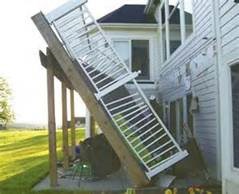
A common mistake is to improperly attach the deck to the home.

Some experts say we’ll be facing a warmer summer than usual this year. Since mild weather is the norm for most of us in the Pacific Northwest, it’s easy to be caught unprepared when the thermometer soars. Now is the time to think ahead and get prepared.

Choosing an appropriate cooling method can be a tough task especially when it’s cloudy and cool. When a heat wave hits many of us will finally lose our tolerance and rush off to the home center to buy an air conditioner or fan to make it through. Often these items are sold out.

Below is a quick breakdown of the different types of cooling solutions available with a bit of info on each to help decide NOW how to be set for sweltering days ahead.


How to keep cool

· Central Air Conditioning Retrofit. For most homes with a central forced air system like a gas furnace, a refrigerated cooling coil can be inserted into the existing system to provide cooling to the entire house. This can be somewhat expensive as it involves the addition of an evaporator coil outside and modification of the electrical system.

· Swamp Coolers. Throughout warmer, dryer zones like Arizona swamp coolers are very common. They use evaporating water to provide cooling. Due to the higher humidity in our area swamp coolers are not generally considered to be a good solution.

· Heat Pumps. Heat pumps are considered the most energy efficient central heating/cooling systems available. Heat pumps use refrigerant to move heat to and from the inside and outside of the home. They cool in summer and heat in winter. The savings come from the system’s ability to scour heat from outdoor air even when temps are low. The magic is in the ‘compressor’. Heat pumps are best chosen during new construction as they can take longer to pay-off with energy savings.

· Split systems. Split systems are great as ‘single room’ solutions. They are like miniature heat pumps permanently mounted high on a wall. Shorter refrigerant lines are routed through the wall to an evaporator on the outside wall. These systems are great for cooling/heating one room at a time like bedrooms. The drawback is the expense of adding an electrical circuit to the location of the system. Some homes incorporate split systems with central systems to solve ‘hot-spot’ problems.

· Window shakers. An economical system seen everywhere that involves placing a self-contained air conditioner in a window opening. These units are often removed during the winter. Be careful, they are often hard to mount and can cause damage to double pane windows. They can also block emergency egress in case of a fire.

· Portable Air Conditioners. This is my personal favorite for its cost and flexibility. Mounted on wheels for portability, these units move hot air out of the room through a hose and window opening. Most units can also control humidity and can be taken with you when you move.

· Personal Coolers. Here’s a personal cooling idea… neck wraps! Place a wet towel or two in the refrigerator. During those hot days you can make use of natures ‘evaporative cooling’ and the fact that the most effective way to cool the body is at the head. There are new technologies that incorporate high-tech cloths of various kinds including one that cools by wetting and then snapping the cloth. Check out the home center.

· Fans. Ranging from ceiling fans to oscillating desk fans and window boxes, fans offer the most affordable and natural solution of all.

On a hot day however the best cooling choice of all may be sipping that favorite ‘adult beverage’ beside the pool.

Ooh la la!

No comments

June is Windermere’s official month dedicated to giving back to our community. In addition to donations given throughout the year we do a Community Service Day where we all roll up our sleeves to benefit a local charity. This year it’s June 20th. Our Windermere office also says thanks to our valued clients and friends by hosting the always entertaining ‘Evening with Ciscoe’.

On June 11th and 18th you are invited to join me at Molbaks Nursery in downtown Woodinville to learn and laugh with Ciscoe Morris, co-host with Meeghan Black of ‘Gardening with Ciscoe’ on King 5 TV . Known for his high energy and humor, Ciscoe is a renowned expert on gardening in the Pacific Northwest, a guest speaker around the world and appears on numerous radio and TV shows.

If you would like to join me at one of these events, please contact me for a FREE ticket!. We’ll also have complimentary hors d’oeuvres and local wines.


You are cordially invited

Please join us Wednesday June 11th

or Wednesday June 18th

5-7 pm

Molbaks Nursery

13625 NE 175th St. Woodinville, WA

Please RSVP to Linnea@Windermere.com or 425-765-2211

Limited seating

Mold

No comments

FunGUS is no FunGI

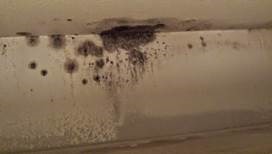
One day a dark spot appears on the ceiling, and as things go, you ignore it until it grows ugly enough to catch your full attention. You finally call your contractor friend who delivers the news, you have black mold! You feel a sense of panic until your friend calms you by saying ‘not all black mold is dangerous’. What now, do I try to test the mold? Leave it alone? Clean it up myself or hire a specialist?

Sensational news stories have given mold a bad name while at the same time raised awareness of a potentially hazardous problem. Mold growing in the base of the shower may be treated with off-the-shelf products while other molds may require major remediation by a specialist. How do we know the difference?

Below please find information to help understand the world of mold and get ideas for treatments. If you need advice or referral to a mold remediation specialist please let me know, I’d be glad to help.

clip_image002


Mold and moisture in the home

What is mold? Mold is a fungus that appears in many forms throughout our world, both indoor and out. Mushrooms, moss, algae and mildew are common forms. Mold grows by spreading spores and thrives in the presence of moisture. We need mold to break down organic material of all kinds. Mold spores can also be allergens that can cause undesirable reactions in humans.

Testing. Most professionals advise that testing is unnecessary since treatment of one type of mold is the same as another.

Clean up. Mold and mildew in bathrooms and kitchens on non-porous surfaces can often be cleaned with household cleaners. Using bleach on mold may not destroy the culture but can serve to lessen the dark appearance.

Repairs. Mold on wood, sheetrock or other porous surfaces can be tricky to repair. I recommend hiring a professional to remediate mold on these surfaces as mold spores can be spread into the airspace of the home. Professionals know how to encapsulate the mold and remove it safely. These specialists can be expensive so be sure to shop around and ask for referrals to reputable contractors

Moisture. Most molds only grow in the presence of moisture so it is important to identify and repair any source of leaks, humidity and moisture. Depriving the mold of moisture can slow or even stop its growth and place it in a dormant state. Roofs should be inspected from the inside and outside on a regular basis. Check crawlspaces for water on the vapor barrier and the sub-floor around drains. Early detection can save money. Check downspouts and foundation grading to keep water away from the home.

Prevention. Ventilation in a home is very important. Bathrooms should have fans that exhaust to the outside and be used to clear humidity following bathing. Be sure to check that the exhaust does not just terminate in the attic but is routed to the exterior. Check dryer vents to be sure that all moisture is fully exhausted. Use fans in kitchens during cooking to eliminate moisture. Check the vapor barrier in the crawlspace to ensure it is complete and seamless.

For additional tips visit http://www.epa.gov/mold/pdfs/moldguide.pdf or call me for a hard copy. [ A newer law requires landlords to give this pamphlet to their tenants.]

Courtesy of Linnea Jones – Windermere Real Estate 425-765-2211

A recent news story about carbon monoxide poisoning has raised concern for my friends, family and clients.

Some of the most dangerous situations are often the most simple and inexpensive items to address. I’ve attached a quick checklist to help identify and fix some of the most obvious items we all tend to overlook. The list is not exhaustive so please be on the look-out for other problems in your home.

If you need any further information or help identifying a solution, please let me know, and as always if you know anyone in need of real estate help I’m always ready to serve.


Save the Date for our

7th annual Shredding Event!

April 26th 10:00AM – 2:00PM

Windermere Office Parking Lot

11411 NE 124th Street, Suite 110, Kirkland


Simple Safety Checklist

r Carbon Monoxide Detectors. The federal government requires CO detectors to be installed on all new homes, rentals and homes being re-sold. Carbon monoxide is a silent killer because it’s colorless and odorless and can cause its victim to become drowsy and sleepy. CO replaces oxygen in the victim’s blood stream. Detectors should be placed by each sleeping area on each floor. They are relatively inexpensive and easy to install.

r Smoke and fire alarms. Older alarms need to be replaced after about 10 years as their effectiveness diminishes with time. Be certain to test your alarms monthly and replace the batteries once per year at minimum. Even if an old battery passes the test it can quickly fail during its alarm cycle. New technology alarms are available with 10 year maintenance free batteries and specialized alarms designed to work in a kitchen environment. It’s worth a trip to the home store.

r GFCI’s. Ground fault circuit interrupters are installed to prevent shock and should be installed in bathrooms, kitchens, garages and outdoor outlets. Purchase an inexpensive tester with a GFCI test button and verify that all interrupters are working. This should be done annually.

r Electrical cords. Extension cords and multi-outlet strips are a major cause of house fires. Cord plug ends should be examined for fraying or other signs of failure like discoloration or even warmth to the touch. Try to minimize the number of cords attached to a single outlet and if a cord is not in use, unplug it. Never run a cord across a walk-way or under a carpet.

r Rescue Ladders. Often forgotten, upstairs bedrooms can become a trap during a fire. Each room should have a way out; consider equipping each room with an escape ladder.

r Visibility; street numbers, lighted walkways. If a firefighter cannot find your home in a hurry, his delay could be deadly. Experience arriving at your home at night to see if it can be easily found. If not be sure your house numbers are reflective and visible. Lighted walkways can prevent tripping and help lead a rescuer to your front door.

r Non-slip tubs. Believe it or not, slippery tubs are a major cause of injury and death. Install inexpensive non-slip strips and for the elderly install “grab” bars to assist while entering the tub.

For additional tips visit http://www.nsc.org/safety_home/Pages/safety_at_hom.aspx

Courtesy of Linnea Jones – Windermere Real Estate 425-765-2211