Linnea Jones – Realtor

Windermere Real Estate / Northeast, Inc.

Browsing Posts published by Linnea

It’s not too late to spruce up that outdoor patio, porch or deck. The warm days of summer afford the opportunity to get outside and have some fun or kick back with friends.

Outdoor spaces are increasing in popularity with many home buyers looking for great amenities like outdoor kitchens and firepits. Most homes have some sort of space for outdoor enjoyment even if it’s a simple porch area. These spaces beg to be decorated just like the interior of the home. The addition of a few items can turn an otherwise boring space into a pleasant attraction.

Below is a starter list of ideas for the outdoor space. I hope you’ll find something that sizzles for you (even if it’s just a steak). If you’ve created something special that you’d like to share, give me a call. I’d love to see what you’ve done.
clip_image002


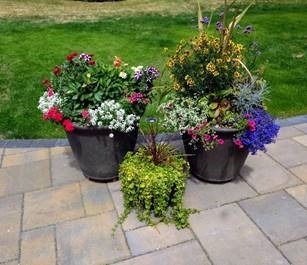
Adding sizzle to your outdoor space.

You can use the same principles of design used by indoor designers. Here are a few starter tips:

  • Use groupings of Three. For some reason, our brains like that better even numbers.
  • Coordinate colors and patterns across the space. Repeating these elements create continuity (something else our brains like).
  • Choose a theme. Themes that echo the great outdoors are very popular. Imagine that vacation dream destination by the waterfall or ocean. Or maybe a countryside motif?
  • Add lighting for mood and function. String lights that have full sized bulbs are quite popular and inexpensive. Drape them around for a party feel that provides romantic lighting of the space.
  • Create interesting boundaries and borders using potted plants, bamboo or lattice structures, or even trees in large pots. These can create a sense of privacy and add to that outdoor room feel.
  • Water. From the full-on Koi pond with waterfall to the plug-in fountain, adding the sight and sound of water can add a magical feel.
  • Fire. Portable fire-pits are available in many sizes and forms to fit every budget. The most popular these days are gas-fired. Gas, either natural or propane is a cleaner and safer solution that wood-burning. S’mores anyone?
  • Rugs. To complete the feel of being in a room, consider using an outdoor rug. Outdoor rugs resist rot and provide a comfy place for bare feet. They also add style and color.
  • Friends. Finally, throw a party to show off your new creation. After all isn’t it all about community? (I’m accepting invitations)

Garage Secure?

A neighbor recently had his car stolen from inside his locked garage. The thief was able to defeat the garage door opener, enter the car (with the keys inside) and make off with his prized possession.

For those of us who presume our garage (aka storage unit) is secure, consider that a thief can enter your garage in 6 seconds using only a simple wire coat hanger. More sophisticated thieves use electronic hacks to fool the signal on older models of garage door openers. Consider reviewing the security aspects of your garage and door locking habits. See the attached list for ideas and information.


Security tips for your garage
  • Always lock your car and take your keys with you.
  • Do not hide a spare key on your vehicle.
  • Roll up your windows completely.
  • Put any valuables out of sight or lock them in the trunk.
  • Park your car in your garage and lock it. Vehicles are least safe at the curb, more safe in the driveway and most secure in the garage.
  • Remember to lock the car doors while it’s in the garage.  Also, lock side doors and the door to the home using a deadbolt. If an intruder accesses the garage they could get into the house.
  • If you have a separate remote control, hide it in the car. Visible remotes are an invitation to a thief. With the remote combined with information from your glove box a thief can get into your garage.
  • For garage doors without an opener, install & use tamper-proof latches.
  • Newer garage door openers can send an alarm to a smartphone if the garage door is opened using the opener.
  • Consider installing a number of latches and shields available. Some latches and zip-tie tricks may keep a thief out but could defeat the safety aspect of the quick-release latch.
  • One device to consider is a $20 shield from www.thegarageshield.com. To see how the break-in occurs view their video.
Other Tips
  • Carry your drivers’ license, registration, and insurance card with you.  Don’t leave personal identification or credit cards (or receipts) in your vehicle.
  • Write your license plate and vehicle identification number (VIN) on a card and keep it with your driver’s license.  In the case of an auto theft, being able to promptly provide this information to the police will be very helpful.
  • Etch your VIN into the windshield and other parts of the car.  This discourages car thieves from taking and then selling your car, and also aids in its recovery if it is stolen.

Following a long and wet winter, our homes will soon be begging for our attention. It’s time to take a walk around the house to see what the winter weather has done to our once pristine homes. Water and wind, ice and snow have a way of damaging our home’s exterior and the dark days have disguised indoor problems. Even critters seeking shelter may have invaded crawlspaces and attics while moss and mildew have had their heyday. It’s time to spring into action and get ready for some outdoor living.

If you are anything like me I could use a list to get me started and guide me to completion. So I’ve provided the attached list.

Sincerely,

clip_image004

Windermere Real Estate

425-765-2211

Oh, By the Way…whenever you come across people who are thinking about buying or selling a home and would appreciate the same level of service I provide to you, please forward their name and telephone number to me. I will gladly follow up and offer them the high-quality service you currently receive.


Save the date for our 10th Annual

Shredding & Recycling Event

April 22nd ~ 10AM – 2PM

Windermere office parking lot

1141 NE 124th St. Suite 110, Kirkland


SPRINGTIME MAINTENANCE CHECKLIST

  • Open hose bibs, check for leaks
  • Clean gutters and downspouts after trees have seeded
  • Hose off house exterior, scrub off any mildew. Check if caulking is needed between siding boards and around windows
  • Clean gaps between deck boards, clean out under decks and porches
  • Treat decks & walks for moss, mold and mildew
  • Apply moss killer to roof
  • Clean around air conditioner compressor
  • Inspect weather stripping, replace or repair as needed
  • Clean sliding door tracks and lubricate with white lithium compound
  • Inspect septic field and tank area for flooding or odor
  • Tune up lawn mower and inspect lawn equipment
  • Aerate lawn and add lime (especially in the Northwest)
  • Inspect basement/crawl space, house, and attic for signs of pests such as carpenter ants, wasps, and rodents. Repair any loose vent screens. Inspect for signs of water at the same time.
  • Replace furnace filter, order servicing if needed
  • Clean kitchen exhaust fan filters
  • Vacuum bathroom vent fan covers
  • Clean dryer vent ducting and wash dryer filters
  • Examine caulk and grout in shower, repair as needed
  • Clean dishwasher food filters and check that openings in spray arms are clear
  • Collect old paper records, old electronics, old TV’s and small appliances to take to Linnea’s Shredding & Recycling event on April 22nd.

Want some help with all the work? I have referrals to trades people, just give me a call.

Linnea Jones 425-765-2211

Dear friend,

Whether you do your own remodeling work or just hang an occasional picture you have likely used a tape measure. Since they don’t come with a manual you may have overlooked some of the features pros use. Attached is a list of helpful features that may surprise you.

For those who wish to leave the tape measure to the pros, I have a list of contractors and handy men I can refer. Just give me a call.

clip_image002

Sincerely,

clip_image004

Windermere Real Estate

425-765-2211

By the way, if you know someone who would like help with purchasing or selling a home or need a referral to a qualified service provider please give me a call with their name and number. I’ll be delighted to help.

Special note: The first 10 people who call me about this letter will receive a FREE tape measure! Now you too can measure up.


Tape Measures

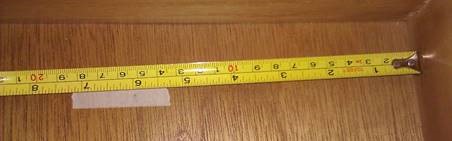
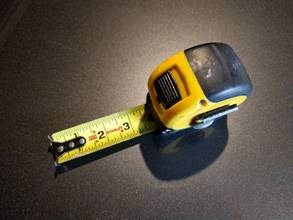
Not all tape measures are the same and may not contain all the features or markings discussed below. Some are designed around the metric system and others around the imperial system. Some have both. Some are narrow and some are wide. The professionals like the wider ones because of what’s called “stand out”. Stand out refers to how long the tape will remain stiff until it bends, this helps when working alone.

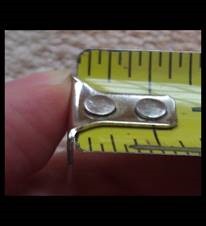
clip_image006

Most tapes will have a floating hook on the end that can be hooked onto the edge of what you are measuring. The hook floats a distance equal to its thickness to provide accurate inside and outside measurements. Many pros will measure starting at the 1” mark to avoid this floating feature and get a more accurate result, just remember to subtract an inch from the final measurement if using this trick.

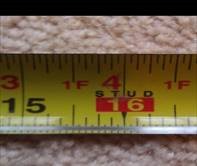
clip_image008

Some tapes have markings designed around common construction measurements. These marks can be a simple arrow or diamond or in this picture the word “stud”. Most walls have studs at 16” On Center “OC” referring to the middle of each stud.

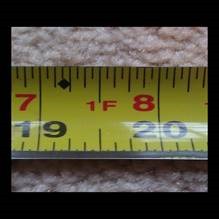
clip_image010There’s also a 19.2″ ceiling joist measurement. Like studs, they are spaced with OC measurements. The reason for this odd 19.2″ measurement is similar to the reason for the 16″ stud measurement; it divides evenly into an 8′ span, which is typical for American building materials. A 4’x8′ piece of plywood will span 6 joists, and a 4’x8′ piece of drywall will span 7 studs (or 4 studs if you’re hanging vertically). If the math looks funny to you, make sure you remembered to count the first stud/joist at the 0″ mark.

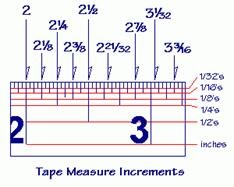
clip_image012Most tapes have increments as small as 1/32”. Sometimes these are written out but mostly they will just be a series of progressively smaller lines. If they aren’t written out, just remember that each smaller line is ½ of the previous one.

clip_image014Here’s a great trick. Place masking tape on the object you are measuring and transfer the markings from the tape to the masking tape for greater visibility and accuracy.

Garage Doors

No comments

If you own a garage door you are probably fully aware they aren’t maintenance free. From squeaks and rattles to jamming and outright failure the garage door system contains many moving parts that need regular attention. They can even become dangerous. We recently found ourselves in “failure mode” … car almost stuck inside the garage! If we had performed the recommended maintenance, we might have avoided the emergency repair and panic of the situation.

Below is a brief list of garage door maintenance items and inspections that could have made our lives much easier. Maybe I can help you avoid this headache.

If you decide to hire a professional, please give me a call for a referral.


Garage Door Maintenance / Safety Check

· Inspection. Stand inside the garage with the garage door closed. Look over the garage door springs, cables, rollers, pulleys and mounting hardware, such as hinges, for signs of wear or damage. Look for cable wear or fraying. Is the mounting hardware becoming loose? If something doesn’t look quite right – or doesn’t sound quite right – it could be a more serious issue.

· Door balance test. If your door is equipped with an automatic opener: close the door and disconnect the automatic opener (pull the red handle). Once you are able to lift the door manually: Lift the door. It should lift smoothly with little resistance and should remain fully open. If it is difficult to open or does not remain open, the door may be out of balance.

· Reversing mechanism test. (if your door is equipped with an automatic opener system). Note: garage door openers manufactured after January 1, 1993, are required by federal law to be equipped with a reversing mechanism and a photo eye or edge sensor as added measures of safety to prevent entrapment. If your system does not have these features, replacement of your automatic operating system is recommended.
With the door fully open, lay a piece of wood such as a 2 x 4 on the floor in the center of the garage door opening where the door would touch the floor. Push your garage door openers button to close the door. When the door strikes the wood, the door should automatically reverse. If the door does not reverse, the door should be serviced by a trained service technician.

· Photo eye test (if your door is equipped with an automatic opener system).
With the door fully open, push your garage door openers button to close the door. Wave a long object, such as a broomstick, in front of one of the door’s photo eyes so it “breaks the beam.” The door should reverse.
If it doesn’t, pull the broomstick out of the path of the closing door. Close the door. With the door in the closed position, clean the photo eyes with a soft, dry cloth. Gently adjust the photo eyes by hand if they appear to be out of alignment. Open the door and repeat the test. If the door does not reverse and reopen, the door should be serviced by a trained service technician.

· Force setting test. With the door fully open, push your garage door openers button. As the door is closing, hold up the bottom of the door with your hands outstretched and stiff. If the door does not easily reverse and continues to close, pull your hands away immediately. The closing force is excessive and the door should be serviced by a trained service technician.

· Lubrication. Apply a small amount of spray lubricant to the door’s hinges, rollers and tracks annually.

A safety check should be performed annually. Garage door maintenance companies can establish a maintenance schedule to perform the checks and make necessary repairs. If you need a referral, I have one.

Some information excerpted from www.garagedoorcare.com.

Easy Inventory

No comments

Easy Inventory

2:00 AM. “Water has flooded the upper floor and is puddling in the light fixtures downstairs. The carpet is soaked, the ceiling is coming down and the floor is ruined!” What followed was a disaster recovery project that lasted months and required all items in the house to be removed and either placed in a dumpster or a storage unit.

Fire, water damage or theft can be disastrous even if fully covered by insurance. At some point in an insurance claim process, you will be required to provide a list of items lost. We didn’t have a full list of items lost so we were left to rely on our memory alone. The insurance company required proof of the item and its value. Our claim fell way short of reimbursing us for our loss.

Experts suggest making a thorough inventory of the contents of the home and save it in a secure location. Don’t let it be so overwhelming that you put it off. Attached are tips on making the process easy and painless.


Home Inventory tips

Getting it done is the most important thing. We chose to take photos using our smartphone and its own automatic online storage. We took less than an hour and now have the peace of mind that we at least have an off-site record.

· Insurance portals. Many insurance companies have free inventory tools for storing images of household items and receipts. Some of these are structured as item by item cataloging requiring you to describe the item then upload photos and copies of receipts for each item. This can be helpful for expensive items but cumbersome to list every item in the home. If you change insurance companies, you will need to start over with the new inventory.

· Taking photos. Have someone assist by opening cabinets, finding serial numbers and opening drawers. Move systematically from room to room taking a shot from each angle, identify high value items and take close ups to show condition. If the item has a serial number like a computer, take a close up. Use the high resolution setting to ensure that all items can be identified. Videos can be taken for overview. Photos are best for detail.

· Storing photos. Leaving photos on the camera can be risky. Its best to either print them out or save them to a computer, memory stick or DVD. The best option is to store them in the “cloud”. Make certain you and another person who lives outside the home knows how to access photos in the cloud. If stored on disk or memory stick store them in a fire safe or bank security box.

· Receipts. Take photos of receipts of high value items and store just like the photos.

· Apps. Many apps are available for smartphones. Most of the “free” apps have a limit on the amount of storage unless you pay for an upgrade.

· Cloud storage. Dropbox, iCloud, OneDrive, Carbonite, Intel, Rackspace and more are available to store photos and files securely on the Internet. Most are subscription based and have limits to the amount you can store. I suggest selecting one that will be around for years to come. One can easily get enough storage for less than $10 per month.

· Inventory services. For those who have more money than time, many companies offer to come to the home and perform the entire process for you.

Wouldn’t it be nice if styles never changed? We could all still be wearing bell-bottoms and homes would all be painted white …well, maybe it’s a good thing styles do change.

Unfortunately, home styling changes and we find ourselves trying to catch up at the last minute when we decide to sell the home.

If you are thinking of selling in the next few years I’ve attached a list of inexpensive updates you can start on now. Call me for a complimentary walk-through to let you know what is most cost effective for your specific home.


Inexpensive updates

· Paint remains the least expensive update and has the greatest impact. Be sure to use muted tones that enhance your furnishings and floors. Generally speaking, the walls should not be the focus of the home. Fancy finishes such as faux and sponge paints are very risky choices.

· Lighting. Those old polished brass fixtures and chandeliers are no longer in vogue. Satin nickel and oiled bronze are today’s favorites. Selecting new “warm” LED bulbs have the added benefit of serious energy saving. LED retrofit kits are available for recessed lights.

· Outlets and switches. Those old ivory colored switches and outlets can be changed out to basic white. Consider upgrading to “Decora” style rocker switches and rectangle outlets for a custom look.

· Appliances. Consider upgrading to stainless or black finishes. Even newer white can fit in if necessary. The cost difference between white and stainless has diminished so many designers recommend stainless steel.

· Cabinet handles. Changing the kitchen and bathroom knobs and pulls can create an instant and dramatic update.

· Door knobs, locks and hinges. Change from bright brass to oiled bronze or satin nickel. It’s best to keep the same manufacturer as the original to avoid installation difficulties.

· Counters. In the kitchen or bathroom, new “solid surface” counters are the choice of today’s designers. Inexpensive counter tops can be overlaid or replaced without changing the cabinets.

· Flooring. Solid wood floors are the time tested favorites. Be cautious of cheap laminates or exotic woods. You can’t go wrong with solid oak or cherry. Existing hardwood floors that are damaged can usually be repaired, re-stained, or rejuvenated without replacing.

· Yard. Apply the necessary fertilizers and weed killers to lawns. Create crisp edges to lawns and bedding. Hide ugly objects (the neighbors trash cans) with trees. Start now with small trees or plants so they are filled in by the time you go on the market. Trim or replace overgrown plants. Some plants can overtake a garden bed in just a few years, choose the size and variety with timing in mind.

Remember, if you are planning to sell your home, updates should be less about your own taste and more about what appeals to the broadest number of potential buyers.

This Sucks!

Imagine trying to maintain your home without the benefit of power tools. Power tools like the cordless drill have revolutionized home maintenance. For its versatility and usefulness, I suggest every homeowner have one (or two). That said, I think there’s one very versatile tool that gets overlooked and underutilized, the lowly Wet/Dry Vacuum.

Attached is a list of uses for this great tool that really sucks! I hope you will enjoy the list. If you have other uses that you would like to share please drop me a line or e-mail or text … for the first person to give me a unique use I’ll provide a $25 Home Depot gift card!


Uses for the Mighty Wet / Dry Vacuum


  • Suck gunk from your gutters without the mess. There’s a specialized attachment available to help reach. You can also suck the gunk from drain tiles (tubes that downspouts go in).

  • Suck the water (and tiny toy) out of your toilet.

  • Suck water from clogged drains and even retrieve jewelry from drains.

  • Suck the sawdust from shop equipment as they are being used. Most table saws and power miter saws are ready for hook-up.

  • Suck water out of your carpet following a clean-up or flood.

  • Suck water from the floor if the toilet/sink/tub overflows.

  • Suck the dirt from the floor and mats in your car.

  • Suck lint out of your dryer to improve efficiency.

  • Suck the furnace ductwork of dust (& tiny toys) by removing the floor register and sliding the hose down the hole.

  • Suck the dirt from your garage floor.

  • Suck the snow from stairs and walkways.

  • Suck the dust from the grills of heaters, return air grills and bath fan grills.

  • Suck the ashes (cold ones) from your wood-burning fireplace.

  • Suck the cobwebs and bugs from window tracks and sliding door tracks.

  • Suck the remaining couple of inches of water out of the bottom of your spa.

  • Suck the yucky water out of fountains and small ponds.

  • BLOW! Attach the vacuum hose to the outlet and use it like a blower for the deck, walkways and more. You can also blow up inflatable beds, pools and toys.

Feeling Foggy?


Does a layer of fog on your windows prevent you from enjoying our great Pacific Northwest views? This is a common problem for many homeowners in our area. Sometimes it’s a temporary problem caused by dads steamy cooking or it could mean you have a problem with the windows themselves or even a systemic problem with the home itself.


Foggy windows

There are many reasons why windows accumulate fog. Which one fits your problem?

*  Steam. Cooking or showering can temporarily increase moisture levels. When this moisture contacts a cold window it condenses and fogs the window. Generally, this condition should clear itself when the shower is done or the spaghetti is on the table and there is nothing to worry about.

*  Humidity. For windows with constant fog consider checking the home for the following:

Crawl space vapor barrier. A missing or incomplete barrier could allow ground moisture to enter the home.

Leaks. If water is leaking into the home for a variety of reasons it can be the culprit. Roof leaks or water on top of the vapor barrier are good indicators.

Ventilation. Point of use fans in the kitchen and bathrooms should be used to ventilate moisture before it has a chance to build up. Mold/mildew on window sills is an indicator that humidity levels are consistently too high.

Single pane windows. Older single pane windows have no insulation barrier to the exterior cold allowing condensation on these cold surfaces. Consider installing newer double pane or low-E windows. Before changing all single pane windows to double to save money be sure to calculate your return on investment. The difference in energy savings may not warrant the investment however there are other reasons such as noise reduction and aesthetics to consider.

*  Failed seals. Double pane windows have an air gap between two glass panes, this air gap is often filled with an inert gas such as argon to increase efficiency. These two panes (sometimes 3) are factory sealed together into one unit that is then mounted into the window frame. These seals can degrade over time or be broken allowing the gas to escape and moisture to enter. While there are some unproven methods for removing and re-sealing windows in place, they usually need to be replaced. These sealed units can be popped out of the existing frames and replaced without disturbing the casing.

Fall Not!

No comments

Fall not !

This last week we got a good preview of the impending Fall season prompting many of us to venture onto the roof to clear debris and gutters. Projects like this are common for the Do-it-Yourself home owner. They can also be disastrous. Last December my husband fell from a ladder while cleaning away storm debris. His fall was the result of ladder placed on a slippery surface. Following a trip to the hospital, a surgery, months of rehab and a huge hospital bill we now hire this work out to professionals.


Ladder Safety Checklist

  • Make sure the ladder is suited for the type of job you plan to do.
  • Before using a ladder, especially a ladder that has been stored in the garage for a while, inspect it for cracks or broken joints.
  • Place your ladder on a stable, even, flat surface. Never place a ladder on top of another object.
  • Use the 1:4 ratio to ensure a stable working platform. Place the base of the ladder 1 foot away of whatever it leans against for every 4 feet of height to the point where the ladder contacts at the top.
  • When using an A-frame stepladder, make sure the brace is locked in place.
  • If climbing onto another surface, make sure the ladder extends at least three feet past the platform you’re climbing onto.
  • Secure tall ladders by lashing or fastening the ladder to prevent movement.
  • Always face the ladder when climbing or descending.
  • Keep both feet on the ladder – never put one foot on a rung and the other foot on a different surface.
  • Do not climb higher than the second rung on stepladders or the third rung on straight or extension ladders.
  • Never stand on the top of the paint shelf of a stepladder.
  • Keep your belt buckle (if you have one) positioned between the rungs so it doesn’t catch.
  • Never leave ladders unattended – kids love them. When working with electricity, use a ladder made of wood or fiberglass.